
OCR vs AI Document Analysis
Understand OCR vs AI document analysis for procurement. Learn which technology works better for spec extraction and comparison.
Priya Sharma
Procurement Technology Lead, SpecLens
- 850+companies trust SpecLens
- 99%extraction accuracy
- 8 hrssaved per comparison
- AES-256encrypted · GDPR compliant
When evaluating vendor proposals, you need to extract data from documents. Two technologies promise to help: traditional OCR and modern AI document analysis. But they're fundamentally different—and the choice matters for procurement outcomes. (For the broader context, see our AI in procurement: complete 2026 guide and GenAI for vendor comparison.)
This comprehensive guide explains the technical differences, compares capabilities for procurement use cases, and helps you choose the right approach — pair it with technical spec sheet analysis for the workflow that sits on top of either technology.
Understanding the Technologies
What is OCR?
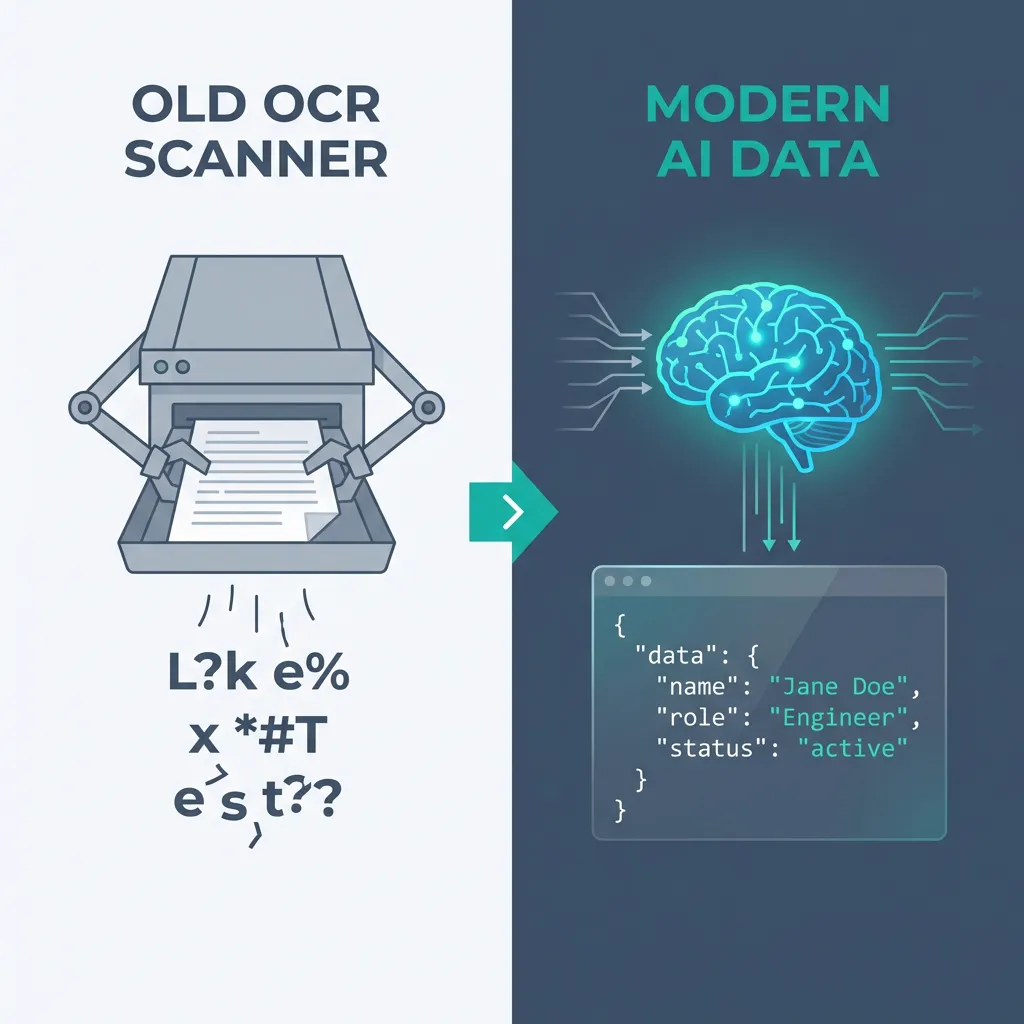
OCR (Optical Character Recognition) converts images of text into machine-readable text. It recognizes characters but doesn't understand meaning.
OCR Output Example:
Model XYZ-500 Motor Power Output 750W Operating
Voltage 220-240V Efficiency Rating 92% Weight
15.5 kg Dimensions 300 x 250 x 200 mm
Just text—no structure, no relationships, no understanding.
What is AI Document Analysis?
AI uses machine learning to understand document content—not just read it.
AI Output Example:
Product: Model XYZ-500 Motor
Specifications:
  - Power Output: 750 W
  - Operating Voltage: 220-240 V
  - Efficiency Rating: 92%
  - Weight: 15.5 kg
  - Dimensions: 300 x 250 x 200 mm
Structured, organized data with context and relationships preserved.
Key Technical Differences
| Capability | OCR | AI Analysis |
|---|---|---|
| Text recognition | Yes | Yes (includes OCR) |
| Structure understanding | No | Yes |
| Context awareness | No | Yes |
| Terminology mapping | No | Yes |
| Data normalization | No | Yes |
| Table extraction | Basic/limited | Advanced |
| Multi-document correlation | No | Yes |
OCR Limitations for Procurement
No Structure Recognition
| Original Structure | After OCR |
|---|---|
| Organized table | Jumbled text |
| Labeled sections | Text stream |
| Hierarchical content | Flat content |
No Terminology Mapping
| Vendor A Says | Vendor B Says | OCR Understands |
|---|---|---|
| Output power | Rated wattage | Different text |
| Operating temp | Ambient range | Different text |
| Data rate | Throughput | Different text |
No Normalization
| Vendor A | Vendor B | OCR Result |
|---|---|---|
| 1000 W | 1 kW | Different strings |
| 25°C | 77°F | Different strings |
| 10 kg | 22 lbs | Different strings |
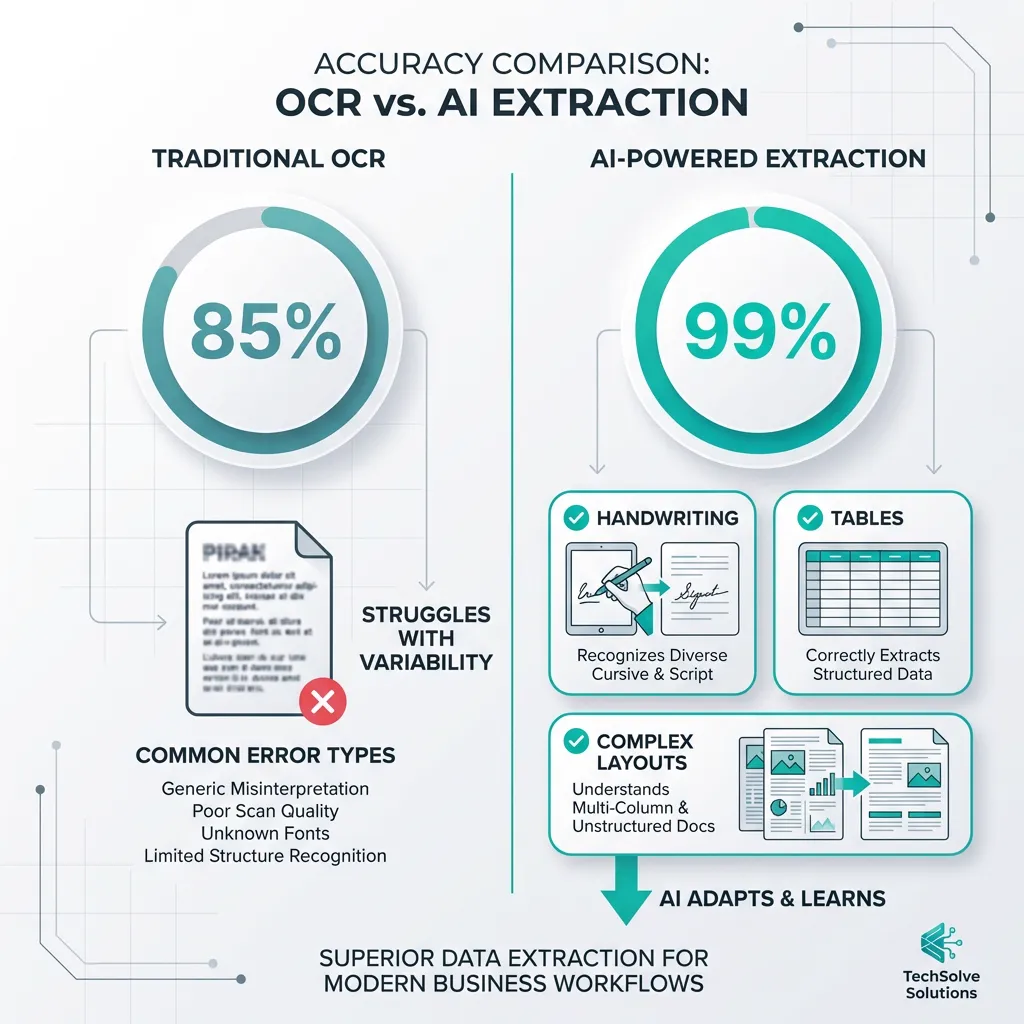
OCR Accuracy by Document Quality
| Document Quality | Typical OCR Accuracy |
|---|---|
| High-quality scan | 95-99% |
| Standard quality scan | 90-95% |
| Poor quality scan | 70-90% |
| Complex formatting/tables | Highly variable |
Critical point: High character accuracy doesn't mean high extraction accuracy. 99% character recognition can still fail to extract structured, usable data.
AI Analysis Capabilities
Data Normalization
| Vendor Input | AI Normalized Output |
|---|---|
| "1000 W" | 1000 (watts) |
| "1 kW" | 1000 (watts) |
| "1.0 kilowatt" | 1000 (watts) |
Terminology Mapping
| Vendor A | Vendor B | AI Maps To |
|---|---|---|
| Power consumption | Electrical draw | Power (W) |
| Operating temp | Ambient range | Operating Temperature |
| Throughput | Data rate | Data Rate |
Cross-Document Comparison
| Capability | What AI Does |
|---|---|
| Specification alignment | Maps same specs across vendors |
| Gap detection | Identifies missing specifications |
| Discrepancy flagging | Highlights differences worth investigating |
Procurement Workflow Comparison
Spec Sheet Processing
| Approach | Steps | Time per Vendor |
|---|---|---|
| OCR | OCR → Human reads → Manual identification → Spreadsheet entry → Manual normalization | 30-60 min |
| AI | Upload → AI extraction → Auto normalization → Comparison matrix | 2-5 min |
When to Use Each Technology
📄 Use OCR When:
- Simple text digitization is sufficient
- Documents are clean and consistent format
- Budget is extremely limited
- Human processing of output is planned
🤖 Use AI When:
- Structured data extraction is needed
- Documents vary in format and layout
- Tables and complex structures are common
- Automation of downstream processing is desired
- Accuracy and consistency matter
Procurement Decision Matrix
| Procurement Need | Technology Required |
|---|---|
| Extract specs from datasheets | AI |
| Compare vendor specifications | AI |
| Identify proposal gaps | AI |
| Verify requirement compliance | AI |
| Normalize units for comparison | AI |
OCR vs RPA vs AI
| Technology | What It Does |
|---|---|
| OCR | "I see pixels and turn them into text" |
| RPA | "I see text in a specific field and copy it to Excel" |
| AI (IDP) | "I understand this is an invoice, regardless of layout" |
The Gap: OCR + RPA fails when layout changes. AI creates resilience because it reads context, not coordinates.
Cost Comparison
| Technology | Typical Cost |
|---|---|
| Free OCR tools | $0 (but manual processing remains) |
| Commercial OCR | $10-50/month |
| AI document tools | $50-500/month depending on volume |
| Manual alternative | Staff time × hourly rate × hours |
Accuracy Comparison
| Metric | OCR | AI |
|---|---|---|
| Character recognition | 90-99% | N/A (not the goal) |
| Structured extraction | 0% | 90-98% |
| Cross-document comparison | 0% | 90%+ |
| Gap identification | 0% | 95%+ |
Choose the Right Technology
OCR was revolutionary for digitizing text. But for procurement—where you need to understand, compare, and analyze—AI document analysis is the appropriate technology — see how SpecLens extracts specs in 3 steps for a worked walk-through.
SpecLens Features → | AI in Procurement Guide → | Vendor Datasheet Comparison →
Frequently Asked Questions
Related Articles
AI Vendor Scoring Systems
Learn how AI vendor scoring systems work for objective evaluation. Balance automation with human judgment for better procurement.
AI in Procurement: The Complete 2026 Guide
Complete guide to AI in procurement. Learn how AI transforms sourcing, spec analysis, vendor evaluation, and automation.
ChatGPT vs Claude vs Copilot for Procurement
Compare ChatGPT, Claude, and Copilot for procurement. Learn which AI works best for document analysis and vendor evaluation.
GenAI for Vendor Comparison (2026)
Discover how Generative AI is revolutionizing vendor comparison. From automated extraction to hallucination-free analysis, learn the future of procurement.