

Procurement Burnout: Hidden Costs
Manual specification review is burning out your procurement team. Discover the numbers behind the silent epidemic and how AI can help reclaim your team's time.
Rhea Kapoor
Head of Procurement Research, SpecLens
- 850+companies trust SpecLens
- 99%extraction accuracy
- 8 hrssaved per comparison
- AES-256encrypted · GDPR compliant
There's a silent epidemic sweeping through procurement departments. It's not visible in quarterly reports or board presentations, but it's costing organizations millions in hidden losses, turnover, and missed opportunities. Procurement burnout is real, and manual specification review is one of its biggest drivers.
The Silent Epidemic in Procurement Teams
Talk to any procurement professional who's spent marathon sessions comparing vendor specifications, and you'll hear the same story: pages of technical documents, dozens of tabs open, spreadsheets that seem to multiply overnight, and the unshakable feeling that something important is being missed.
This isn't occasional stress—it's chronic, systematic, and deeply embedded in how procurement operates. Studies show that 68% of procurement professionals cite outdated tools and manual processes as major sources of job dissatisfaction. When your primary work tool is copy-paste between PDFs and spreadsheets, burnout isn't a risk—it's inevitable.
The Numbers: How Much Time is Lost?
Let's quantify what manual specification review actually costs:
Per-Document Analysis
- 15-30 minutes per vendor datasheet for basic extraction
- 2-4 hours to create a comparison matrix for 3-5 vendors
- 1-2 hours additional time when specifications use different units or terminology
Typical Procurement Cycle
- 10-20 vendor documents per major purchase
- 8-16 hours of manual extraction work
- 30-40% of that time is error correction and verification
Annual Impact
For a procurement team handling 50 vendor evaluations per year:
- 400-800 hours spent on manual specification work
- At $75/hour fully loaded cost: $30,000-$60,000 in labor
- Not counting errors, rework, and strategic work that didn't happen
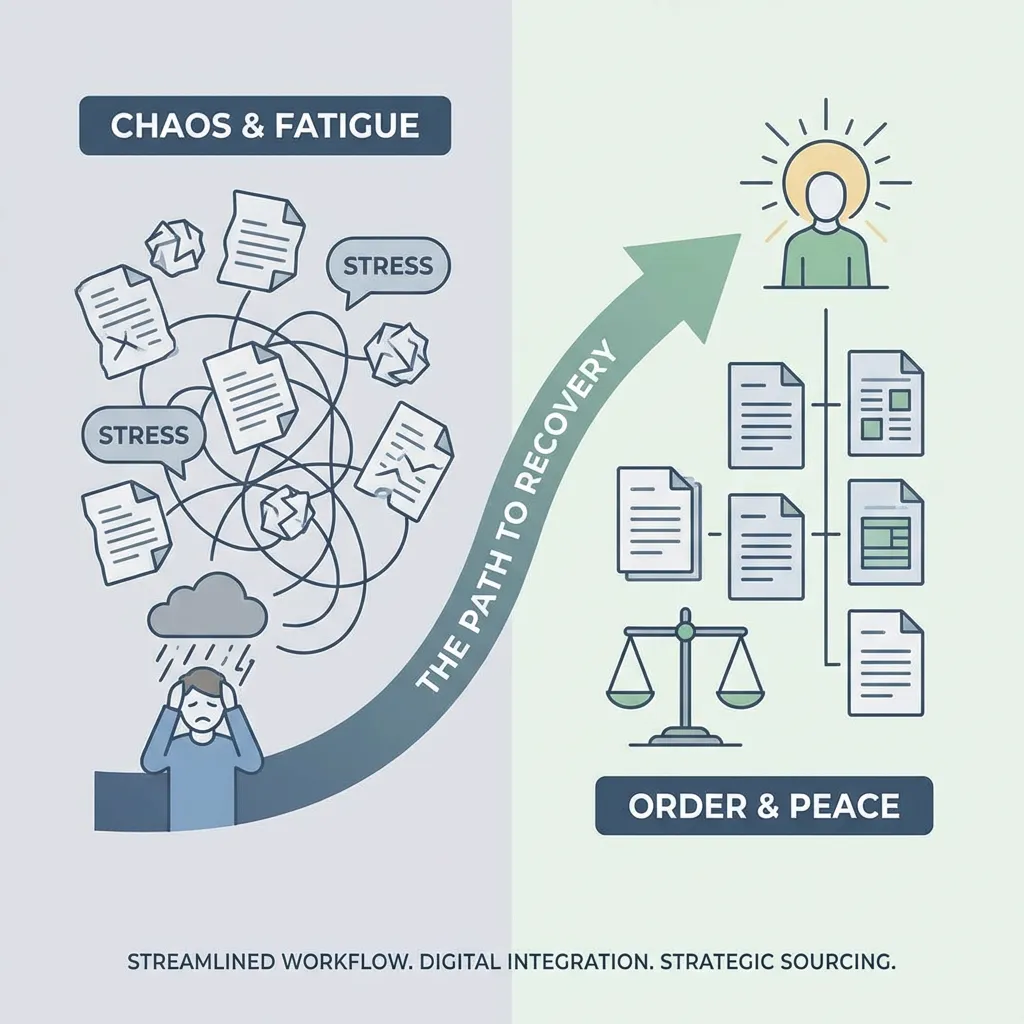
The Human Cost
Beyond the financial impact, there's a human cost that rarely makes it into procurement metrics:
Mental Fatigue
Manually comparing specifications is cognitively demanding. You're simultaneously reading, translating units, tracking across documents, and making judgment calls—all while maintaining accuracy. This sustained cognitive load leads to decision fatigue, where the quality of decisions degrades over time.
Error Accumulation
Tired people make mistakes. Manual specification extraction has a documented 4-6% error rate—but those errors compound. A missed specification can cascade into wrong vendor selection, change orders, project delays, and relationship damage.
Staff Turnover
One study found that a CPG company saw 34% attrition in 18 months among staff frustrated with manual processes. Replacing a procurement professional costs 50-200% of their annual salary. The best people leave first—they have options.
Strategic Work Displacement
Perhaps the biggest cost is invisible: the strategic work that never happens. Every hour spent copy-pasting specs is an hour not spent on:
- Building supplier relationships
- Negotiating better terms
- Developing category strategies
- Identifying innovation opportunities
Why Manual Review Persists
If manual specification review is so costly, why does it persist? Several factors keep organizations stuck:
"This Is How We've Always Done It"
Institutional inertia is powerful. When everyone has always reviewed specs manually, the pain becomes normalized. "That's just part of the job" becomes the accepted answer.
Lack of Visibility
Leadership often doesn't see the true cost. Time spent on specification analysis is dispersed across many purchases and rarely measured directly. The burnout is happening, but it's not showing up in KPIs.
Fear of Change
New tools require new processes. There's legitimate concern about implementation effort, training, and the risk of getting it wrong. Better the devil you know.
Breaking the Cycle with AI
Modern AI can fundamentally change this equation. Here's what becomes possible:
Automated Extraction
AI reads vendor documents—PDFs, datasheets, proposals—and extracts specifications automatically. What took 15-30 minutes per document takes seconds. Accuracy is higher than manual extraction (98%+ vs 94-96%).
Intelligent Normalization
Different vendors express the same specifications differently. AI normalizes units, terminology, and formats so you can actually compare apples to apples.
Instant Comparison Matrices
Instead of hours building spreadsheets, AI generates structured comparison matrices automatically—with citations back to source documents.
Time Shifted to Strategy
The hours saved on extraction can be redirected to vendor negotiation, relationship building, and strategic sourcing—work that actually requires human judgment.
Reclaim Your Team's Time
Procurement burnout isn't inevitable. It's a symptom of processes that haven't kept pace with available technology. Teams using AI-powered specification tools report:
- 90-95% reduction in specification extraction time
- 80% faster comparison matrix creation
- Higher job satisfaction from strategic work focus
- Lower error rates and rework
The question isn't whether your procurement team is experiencing burnout from manual processes—it's whether you're ready to do something about it.
Want to see how much time your team could reclaim? Try our free Procurement ROI Calculator to quantify your potential savings, or see how SpecLens extracts specs in 3 steps to experience AI-powered specification analysis yourself. The dollar impact of leaving the manual process in place is unpacked in our true cost of manual procurement analysis, and the cycle-time fix is in our procurement cycle time reduction guide.
Frequently Asked Questions
Related Articles
5 Procurement Best Practices for 2026
Stay ahead of the curve with these essential procurement best practices. From digital transformation to sustainability, learn how to modernize your sourcing.
The True Cost of Manual Procurement
Manual processes are bleeding your budget. We analyze the hidden costs of human error, slow processing, and employee burnout.
Procurement Automation ROI Guide
Learn how to calculate procurement automation ROI. Build a business case with metrics for time savings and error reduction.
Reduce Procurement Cycle Time
Learn proven strategies to reduce procurement cycle time without sacrificing quality. Identify bottlenecks and accelerate selection.