

Sustainable Procurement Guide 2026
Discover the key trends, legislation, and strategies defining sustainable procurement in 2026. From circular economy to nearshoring.
Rhea Kapoor
Head of Procurement Research, SpecLens
- 850+companies trust SpecLens
- 99%extraction accuracy
- 8 hrssaved per comparison
- AES-256encrypted · GDPR compliant
Sustainable procurement has rapidly evolved from a "nice-to-have" corporate initiative to a core strategic imperative. By 2026, it is no longer just about buying recycled paper or offsetting carbon credits; it is about building resilient supply chains, complying with rigorous global legislation, and driving long-term value creation for your organization.
The data is undeniable: 82% of procurement professionals now consider sustainability a strategic priority, with 70% of companies having already implemented sustainability initiatives within their procurement functions. But while awareness is high, effective implementation remains the biggest hurdle for most organizations.
This comprehensive guide will walk you through the critical trends, data-backed strategies, and real-world examples you need to master green sourcing in 2026 and beyond. (For the supplier-side of the equation — the regulatory landscape and questionnaire fatigue your suppliers are dealing with — see our ESG supplier data burden guide.)
What You'll Learn:
- The 5 key trends shaping sustainable procurement in 2026
- Critical statistics on ROI and adoption rates
- Proven green sourcing strategies with real-world examples
- How to implement a circular economy approach
- Action steps to start your sustainable procurement journey
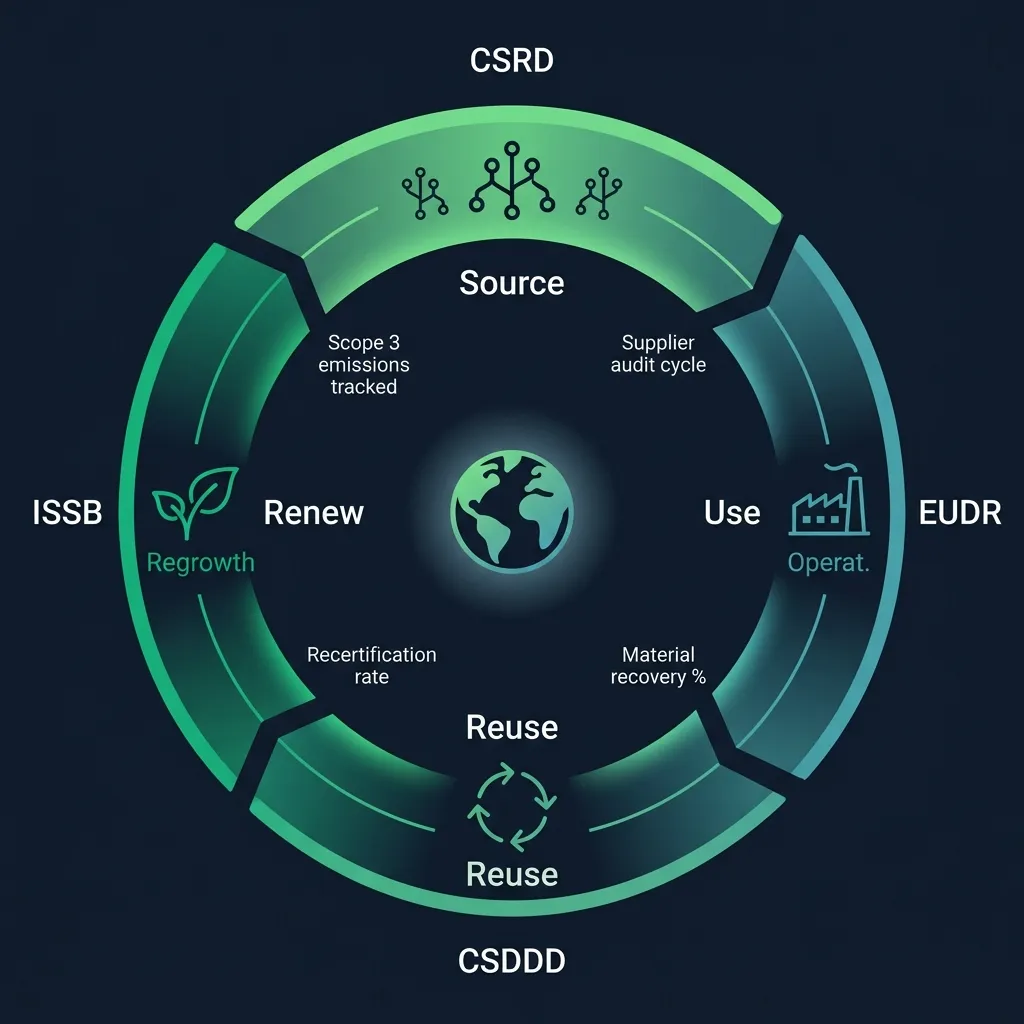
The 5 Trends Shaping Sustainable Procurement in 2026
The landscape of sustainable procurement is shifting dramatically. Here are the five most significant trends you need to understand to stay ahead of the curve.
1. From Voluntary to Mandatory: The Legislative Shift
Sustainability is transitioning from voluntary incentives to hard legal obligations. Regulations like the EU's Corporate Sustainability Due Diligence Directive (CSDDD) and stricter ESG reporting rules are compelling companies to not just track, but actively measure, report, and reduce the carbon footprint of their supply chains.
This isn't just a European phenomenon. 66% of procurement leaders globally anticipate that regulatory requirements and ESG factors will significantly influence their strategic sourcing decisions over the next 3 to 5 years. Failure to comply now means risk of fines, reputational damage, and exclusion from major contracts.
2. The Rise of the Circular Economy
The traditional linear "take-make-dispose" model is rapidly becoming obsolete. 2026 sees a massive pivot toward circular economy principles, where businesses partner with suppliers who prioritize:
- Product Reuse and Remanufacturing: Extending product life cycles.
- Recycled Material Sourcing: Using secondary raw materials.
- Product-as-a-Service (PaaS): Shifting from ownership to access models (e.g., leasing equipment).
The EU is actively developing a Circular Economy Act that aims to create a single market for secondary materials and establish binding requirements for circular procurement. Companies adopting these practices now will have a significant competitive advantage.
3. Radical Transparency & Data Verification
Greenwashing is being met with zero tolerance from regulators and consumers alike. Stakeholders now demand "radical transparency"—tangible, verifiable data backing up every sustainability claim. A simple "we're sustainable" statement is no longer enough.
Digital tools and AI are becoming essential for tracking supplier performance, validating ESG credentials in real-time, and automating compliance reporting. Organizations must be prepared to provide detailed provenance data for the products they procure.
4. Nearshoring and Local Purchasing
Geopolitical tensions, pandemic-induced supply chain disruptions, and a growing awareness of transportation-related carbon emissions are driving a significant increase in local and nearshore sourcing. This is not just about risk mitigation; it's about reducing the environmental footprint of logistics.
5. AI-Powered Sustainability Analysis
Artificial intelligence is revolutionizing how companies assess supplier sustainability. AI can now:
- Analyze supplier environmental impact based on public disclosures and satellite data.
- Predict Scope 3 emissions across the supply chain.
- Identify eco-friendly alternatives and substitutes automatically.
- Automate compliance checks against evolving global standards.
The Business Case: Key Statistics for 2026
Sustainability isn't just good ethics; it's good business. Recent studies provide compelling evidence of the ROI for green procurement:
7 Proven Green Sourcing Strategies
How do you move from understanding the trends to actually implementing a sustainable procurement program? Here are seven actionable strategies leading organizations are deploying right now.
Strategy 1: Implement Rigorous Supplier Sustainability Assessments
Don't just ask for a certificate. Use data-driven vendor scorecards to evaluate potential and existing suppliers on a comprehensive set of ESG criteria, including:
- Carbon emissions (Scope 1, 2, and 3)
- Water stewardship and waste management practices
- Ethical labor practices and human rights policies
- Biodiversity impact
- Use of renewable energy
Strategy 2: Conduct Product Lifecycle Assessments (LCAs)
A low purchase price often hides a high environmental cost. Conduct thorough Lifecycle Assessments to evaluate the environmental impact of a product from raw material extraction to end-of-life disposal. For financial lifecycle analysis, see our TCO Calculator Guide. This allows you to compare the true "green cost" of different options and make more informed decisions.
Strategy 3: Prioritize Local and Nearshore Sourcing
Where feasible, shift procurement to local or regional suppliers. This not only builds resilience against geopolitical disruptions but also drastically reduces carbon emissions associated with long-distance transportation.
Strategy 4: Embed ESG Criteria in All Contracts
Sustainability requirements should not be an afterthought. Embed specific, measurable ESG criteria (e.g., "supplier must have a Science Based Target by 2026") directly into your RFPs, contracts, and service level agreements.
Strategy 5: Partner for Circular Economy Solutions
Actively seek out suppliers who offer take-back programs, leasing models, or products designed for disassembly and recycling. Evaluate whether a product-as-a-service model makes more sense than outright purchase.
Strategy 6: Invest in Supplier Development
Sustainable procurement is not just about dropping suppliers who don't meet the bar. It's also about helping your smaller, strategic suppliers improve. Offer training, share resources, and set collaborative improvement goals.
Strategy 7: Leverage Technology for Monitoring and Reporting
Use digital platforms and AI tools to automate sustainability data collection, monitor supplier compliance in real-time, and generate reports for internal stakeholders and external regulators. Check out our procurement best practices for more strategic guidance.
Real-World Case Studies
Seeing sustainable procurement in action helps illustrate what's possible. Here are a few examples of organizations leading the way:
Microsoft: Tackling Scope 3 Emissions
Microsoft identifies that 77% of its total emissions originate from Scope 3 sources—its supply chain and consumer use. In response, the company has implemented aggressive carbon targets for its suppliers and invests heavily in tools to measure and reduce its supply chain footprint.
Irish Prison Service: Circular Procurement
The Irish Prison Service implemented a mattress recycling initiative that incorporates both environmental and social criteria. They partnered with organizations that employ individuals facing barriers to employment, demonstrating how circularity can drive both environmental and social benefits.
Barcelona City Council: Long-Term Commitment
Barcelona City Council has operated a Sustainable Public Procurement program (+SCC) since 2006, integrating green criteria systematically across all its procurement activities and setting a benchmark for municipal governments worldwide.
Getting Started: Your Action Plan
The transition to sustainable procurement doesn't happen overnight, but it also doesn't need to be overwhelming. Here's a simple 3-step action plan to get started:
- Baseline Your Current State: Audit your current supplier base to understand their existing sustainability practices and identify the highest-impact areas for improvement (usually the suppliers with the highest spend or the highest carbon footprint).
- Set Clear, Measurable Goals: Define specific, time-bound targets (e.g., "80% of strategic suppliers to have carbon reduction targets within 2 years").
- Invest in Tools and Training: Equip your procurement team with the digital platforms needed to track sustainability data and the training to understand ESG requirements. See our guide on the best procurement software for 2026.
Conclusion: The Cost of Inaction
With potential climate-related disruptions estimated to cost global businesses $120 billion by 2026, sustainable procurement is no longer a "nice to have"—it's a fundamental risk management strategy. Inaction is the single biggest risk of all — pair this with our supply chain resilience strategy 2026 playbook for the structural moves.
By adopting these green sourcing strategies today, you don't just protect the planet—you build a stronger, more resilient, and more valuable business for the future. The organizations that move now will be the ones that thrive. Standardize the supplier-side request format with our ESG Vendor Scorecard Template and Sustainable Procurement Checklist.
Start Assessing Your Suppliers Today
Ready to build a greener supply chain? SpecLens helps you instantly analyze vendor proposals, compare sustainability criteria, and make faster, smarter procurement decisions.
Try SpecLensFrequently Asked Questions
Related Articles
The ESG Data Burden: How Compliance Requests Are Breaking Supplier Relationships
Suppliers are drowning in incompatible ESG requests. With CSDDD, EUDR, UFLPA, and the EU AI Act all converging by 2027, learn how to redesign your ESG supplier intake to collect what you need without burning relationships.
Best Procurement Software 2026: Top 6
Discover the best procurement software for 2026. Compare top tools like SpecLens, SAP Ariba, and Coupa to find the perfect match for your business.
5 Procurement Best Practices for 2026
Stay ahead of the curve with these essential procurement best practices. From digital transformation to sustainability, learn how to modernize your sourcing.
What Makes an RFP Complex? A Scoring Framework (2026)
Learn the 5-dimension RFP complexity scoring framework used by procurement teams to estimate review time, allocate resources, and decide when AI assistance is justified.