
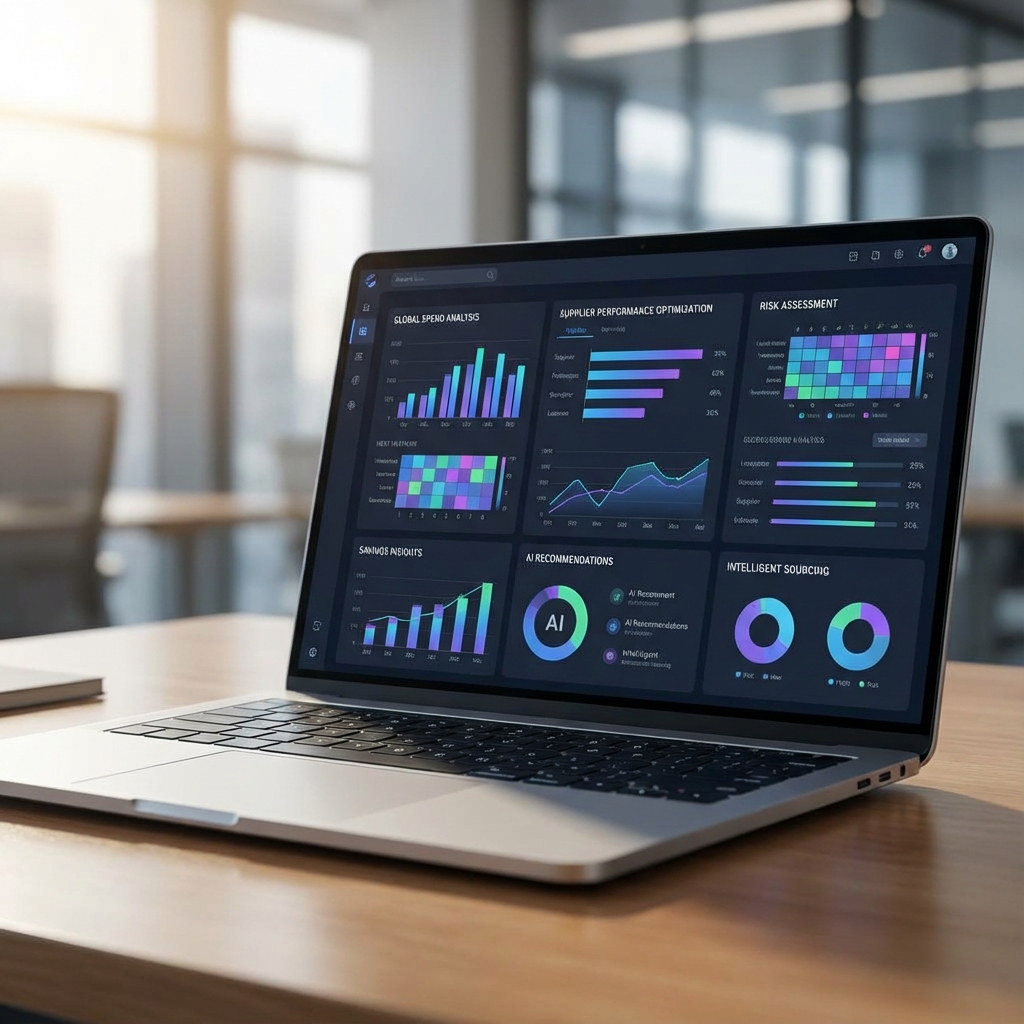
Best Procurement Software 2026: Top 6
Discover the best procurement software for 2026. Compare top tools like SpecLens, SAP Ariba, and Coupa to find the perfect match for your business.
Priya Sharma
Procurement Technology Lead, SpecLens
- 850+companies trust SpecLens
- 99%extraction accuracy
- 8 hrssaved per comparison
- AES-256encrypted · GDPR compliant
The Evolution of Procurement Software in 2026
As we move into 2026, the procurement software landscape continues to undergo rapid transformation. The focus has shifted from simple digitization of paper processes to intelligent, AI-driven automation. Modern procurement teams are no longer just looking for a place to store contracts; they need tools that actively help them make better purchasing decisions.
In this guide, we've curated the top procurement software solutions for 2026, categorized by their primary strengths. Whether you're a small business looking to control spend or an enterprise seeking comprehensive source-to-pay automation, there's a tool here for you. Before selecting any software, it helps to understand how to compare product specifications effectively.
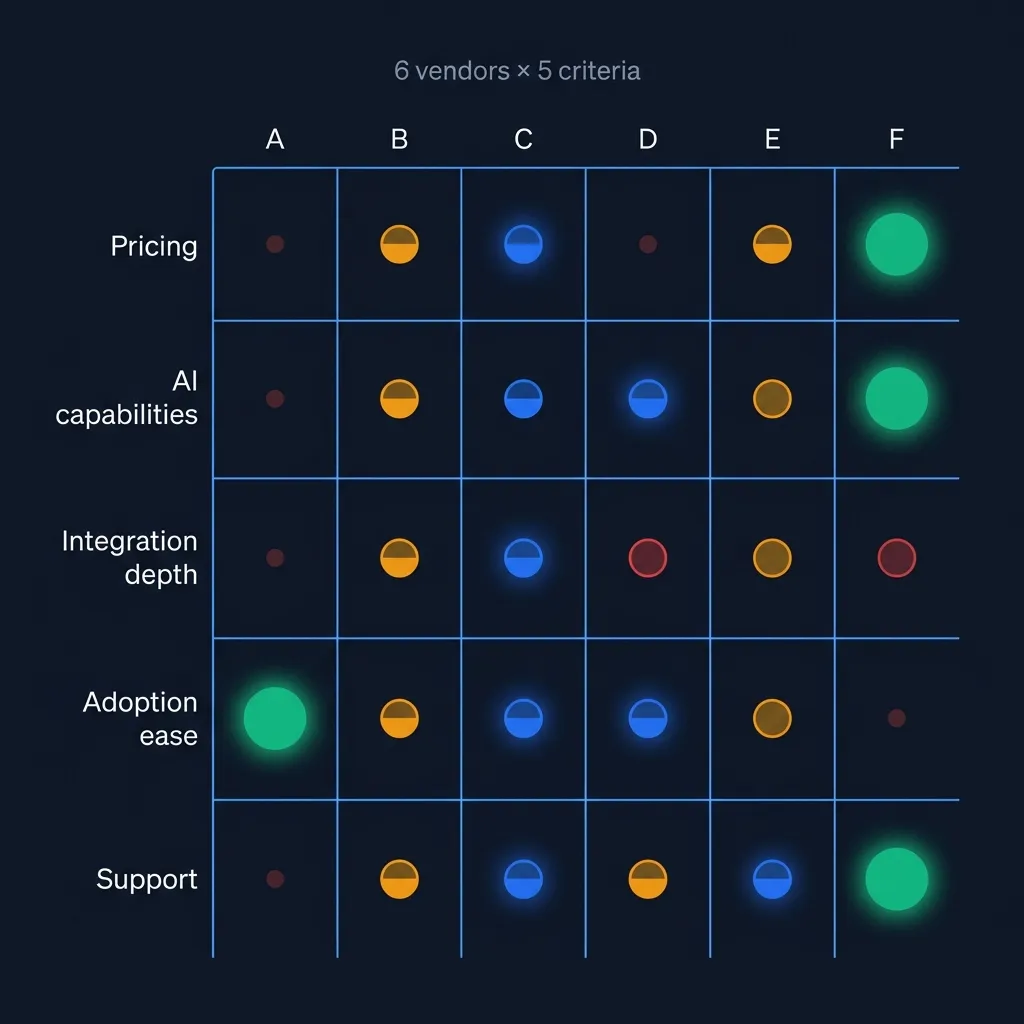
Top 6 Procurement Software Tools for 2026
1. SpecLens: Best for Specification Comparison & Data Extraction
Ideal for: Teams that buy complex equipment, materials, or services where technical specifications matter.
While general procurement platforms handle the "process" of buying, SpecLens fills a critical gap: the "analysis" of what you are buying. It uses advanced AI to extract data from unmatched vendor proposals—PDFs, Word docs, Excel sheets—and creates instant, side-by-side comparison matrices (see our vendor datasheet comparison methods for the underlying workflow).
- Key Feature: AI-powered extraction that normalizes different units and terminologies.
- Why it wins: Saves hours of manual data entry and prevents costly specification errors.
- Verdict: The #1 add-on tool for any procurement team dealing with technical rfps.
2. SAP Ariba: Best for Enterprise All-in-One
Ideal for: Global enterprises needing a complete source-to-pay suite. (See SpecLens vs SAP Ariba and Best SAP Ariba alternatives for the competitive landscape.)
A giant in the industry, SAP Ariba offers an end-to-end solution that covers everything from supplier management to invoicing. Its massive supplier network is a significant advantage for finding new vendors.
- Key Feature: The Ariba Network for connecting with millions of suppliers.
- Why it wins: Unmatched scale and integration with SAP ERP.
3. Coupa: Best for Business Spend Management (BSM)
Ideal for: Mid-to-large enterprises focused on spend visibility and user adoption. (See Coupa alternatives.)
Coupa is renowned for its user-friendly interface and focus on "Business Spend Management." It excels at ensuring employees actually use the system, which improves compliance and spend visibility — also worth pairing with our procurement intake management guide for the front-door layer.
- Key Feature: Community Intelligence that benchmarks your spend against others.
- Why it wins: High adoption rates due to an intuitive UI.
4. Precoro: Best for SMBs
Ideal for: Small and medium businesses needing quick deployment.
Precoro offers a streamlined, no-nonsense approach to procurement. It handles purchase orders, approvals, and budget tracking without the complexity or price tag of enterprise suites.
- Key Feature: Simplicity and ease of setup (often up and running in days).
- Why it wins: Perfect balance of features and affordability for growing companies.
5. GEP SMART: Best for Direct Procurement
Ideal for: Manufacturing and supply-chain heavy industries.
GEP SMART provides a unified source-to-pay platform that is particularly strong in direct procurement—managing the raw materials and goods used in production.
- Key Feature: Native cloud platform with strong supply chain visibility.
- Why it wins: excellent for complex direct material sourcing.
6. Workday Procurement: Best for Unified Finance & HR
Ideal for: Companies already using Workday for HCM or Finance.
If your organization uses Workday, their procurement module offers seamless integration. It provides a unified view of people, money, and materials.
- Key Feature: Deep integration with workforce and financial data.
- Why it wins: Eliminates data silos between HR, Finance, and Procurement.
Key Trends Driving Software Selection in 2026
Artificial Intelligence is Non-Negotiable
In 2026, AI isn't just a buzzword; it's a requirement. Look for tools that use AI for more than just chatbots. Real value comes from AI that can analyze spend data, predict risks, and—like SpecLens—automate the tedious technical analysis of proposals (see GenAI for vendor comparison). For a deeper dive into AI applications, see our guide on ChatGPT for procurement, the head-to-head ChatGPT vs Claude vs Copilot, and the next-architecture agentic AI in procurement guide.
User Experience (UX) Drives Adoption
The "Amazon-like" buying experience is now the standard. If a tool is difficult to use, employees will bypass it, leading to maverick spend. Prioritize intuitive interfaces.
Integration Capabilities
No tool is an island. Your procurement software must speak to your ERP, slack, email, and other business systems. API-first architectures are preferred.
Conclusion
Choosing the right procurement software depends on your organization's size, industry, and specific pain points.
For managing the transactional side of buying (POs, invoices), platforms like Coupa or Precoro are excellent choices. However, for the strategic side of selecting the right product—comparing complex vendor specs and ensuring technical compliance—SpecLens stands out as the essential specialized tool for 2026. When evaluating any solution, remember to calculate the Total Cost of Ownership over 3-5 years. See pricing options.
Ready to upgrade your tech stack? Start by solving your most time-consuming problem: manual specification comparison. See how SpecLens works and review the features list, or explore our free procurement tools.
References
- 1.Gartner Peer Insights — Procure-to-Pay Suites — Procurement software market analysis and vendor ratings
- 2.G2 — Procurement Software Category — Procurement software user reviews and category data
Frequently Asked Questions
Related Articles
AI Equipment Procurement Guide 2026
How AI transforms equipment procurement in 2026. Automate spec extraction, smart vendor comparison, and data-driven purchasing decisions.
ChatGPT for Procurement: Top 5 Use Cases
Learn how to use Generative AI safely in procurement. We explore 5 high-value use cases and 3 critical risks to watch out for.
Cloud vs On-Premise Software: 2026 Guide
Should you own your infrastructure or rent it? We breakdown the Cost, Security, and Scalability of Cloud vs On-Premise solutions.
Submittal Review Software Compared (2026)
Honest 2026 comparison of AI submittal-review tools — BuildSync, Part3, Remy, iFieldSmart, and SpecLens. Features, ICP fit, side-by-side capability matrix, and the 35% rejection-rate context.