
Orchestration vs Specification Intelligence: 2026 Stack Guide
Procurement orchestration platforms (Zip, Tonkean, Levelpath) coordinate the workflow; specification intelligence (SpecLens) analyzes the substance. Reference architecture, vendor map, and integration patterns.
Rhea Kapoor
Head of Procurement Research, SpecLens
- 850+companies trust SpecLens
- 99%extraction accuracy
- 8 hrssaved per comparison
- AES-256encrypted · GDPR compliant
Key takeaways
- Orchestration platforms (Zip, Tonkean, Levelpath, ORO Labs) coordinate the workflow; specification intelligence (SpecLens) analyzes the substance — both layers are needed in a mature procurement stack.
- Single-layer deployments hit a ceiling: orchestration speeds up workflow but exposes the spec-comparison bottleneck; specification intelligence speeds up decisions but cannot fix a fragmented approval flow.
- Source-to-pay suites (Coupa, SAP Ariba) handle the transaction lifecycle but do not extract or normalize technical specs across vendor proposals at evaluation stage.
- If you are evaluating intake-and-orchestration, evaluate specification intelligence in parallel — the spec-comparison gap surfaces within 90 days of orchestration go-live.
- Hackett Group's Spend Matters SolutionMap covers 16 S2P categories but does not yet have a specification intelligence category — that's the white space the layer occupies in 2026.
Two Procurement Layers, Two Different Problems
In 2026, every chief procurement officer has been pitched on intake-to-procure orchestration. Zip, Tonkean, Levelpath, Pivot, ORO Labs, Omnea — the category has raised over a billion dollars in venture funding in the last 36 months and now operates as the front door of buying at hundreds of mid-market and enterprise procurement teams. The pitch is real: Tonkean's State of the Procurement Tech Stack survey of roughly 300 senior practitioners found that 88% of procurement leaders said employees must log into at least two external systems for every single procurement request, and orchestration platforms genuinely reduce that friction.
Here is what orchestration vendors do not always say in the pitch: making it easier to submit a procurement request does not help the team make a better vendor decision. That happens in a layer below orchestration — the layer where teams compare specs, normalize units, run gap analysis, and figure out whether two vendors are actually offering the same thing. That layer is specification intelligence. It complements orchestration. It does not replace orchestration, and orchestration does not replace it.
This is the architectural map procurement leaders should have in mind when sizing a 2026 technology budget.
Quick Answer: Orchestration vs Specification Intelligence
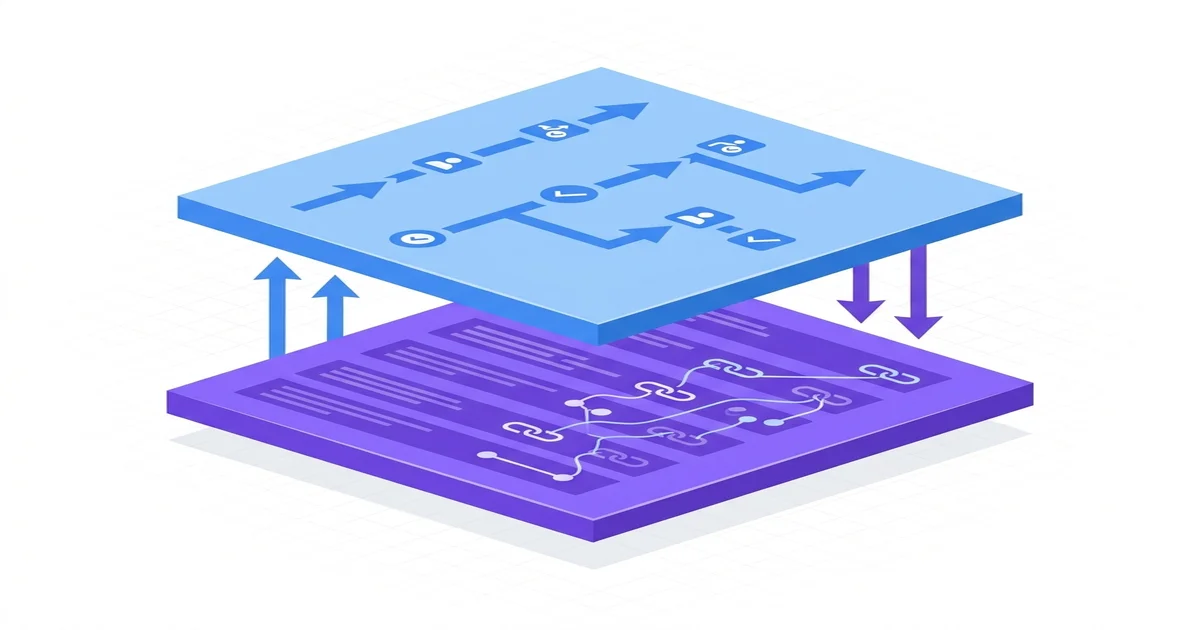
Procurement orchestration platforms (Zip, Tonkean, Levelpath, ORO Labs, Pivot, Omnea) coordinate the workflow of buying — intake, routing, approvals, supplier onboarding. Specification intelligence platforms (SpecLens) analyze the substance of what is being bought — extracting and comparing technical specs across vendor documents. Orchestration handles the request; specification intelligence handles the decision. Mature procurement stacks in 2026 use both: orchestration as the front door, specification intelligence as the analysis layer feeding the recommendation back into orchestration's approval flow.
What Procurement Orchestration Is Good At
Procurement orchestration platforms emerged from a real and measurable problem. Procurement requests in mid-market and enterprise environments routinely touch 10 to 15 separate systems before approval — ITSM, vendor management, contract repository, security review, finance, legal, sourcing event tools, e-signature platforms. Each handoff is a delay; each system is a re-entry of the same metadata. The orchestration layer wraps a unified intake form around all of those systems and routes the request through the right approvers in the right order.
The core capabilities procurement orchestration platforms deliver well:
- Intake forms that adapt to request type, dollar amount, and category — a $5,000 software request takes a different path than a $5 million capital purchase
- Workflow routing that triggers approvals from finance, security, legal, and procurement in the right sequence
- Supplier onboarding that captures W-9s, COIs, banking information, and risk attestations through a self-service portal
- Status visibility for the requester so "where is my request stuck?" becomes self-serve rather than a Slack ping to procurement
- Audit trail that captures who approved what and when
For deeper procurement-intake practice, see the procurement intake management guide.
What Procurement Orchestration Is Not Designed to Do
Orchestration platforms route requests; they do not analyze the substance of vendor responses. The five gaps that show up most often in procurement teams 12 months into an orchestration deployment:
1. They do not extract specs from vendor documents. When a request includes three vendor PDFs as attachments, orchestration moves the PDFs through the workflow but does not read them. The procurement analyst still has to open each PDF, extract the relevant specs, and build a comparison spreadsheet by hand.
2. They do not normalize across vendors. If vendor A reports IOPS at 4K random reads and vendor B reports them at 8K mixed workloads, orchestration cannot tell. The comparison spreadsheet that the analyst builds will look apples-to-apples and silently compare two non-equivalent values.
3. They do not run gap analysis against an RFP baseline. Orchestration tracks the status of an RFP event but does not check whether each vendor response actually addressed each RFP requirement. Silent omissions and hedged commitments slip through.
4. They do not produce decision-ready exports. The output of orchestration is a workflow status, not a comparison matrix. The matrix still has to be built somewhere else and then attached back to the orchestration request.
5. They do not carry citations. Even when orchestration platforms add AI summarization features, the summaries lack the page-level citation traceability procurement audits require.
These are not failings of orchestration as a category. They are the boundary of the category. Orchestration was scoped to coordinate the workflow, not to analyze vendor substance.
What Specification Intelligence Is
Specification intelligence is the procurement layer that handles the spec-comparison work orchestration was never designed to handle. The category and its four pillars are covered in depth in what is specification intelligence; the short version: a specification intelligence platform extracts structured specifications from vendor PDFs, Word, Excel, PowerPoint, and URLs; normalizes units and terminology across vendors; runs gap analysis against an RFP baseline; and produces a citation-backed comparison matrix that exports to Excel, PDF, and PowerPoint.
Where orchestration owns the "coordinate the request" layer, specification intelligence owns the "analyze the substance" layer. Both layers feed the same procurement decision; neither replaces the other.
A Reference Architecture — Orchestration + Specification Intelligence + S2P
The mature 2026 procurement stack has four layers. Each layer solves a distinct problem and integrates with the others.
| Layer | Job | Vendors (2026) |
|---|---|---|
| Intake & Orchestration | Coordinate the workflow — intake, routing, approvals, supplier onboarding | Zip, Tonkean, Levelpath, ORO Labs, Pivot (pivotapp.ai), Omnea (omnea.co) |
| Specification Intelligence | Analyze the substance — extract, normalize, compare specs across vendor documents | SpecLens |
| Sourcing Optimization | Run competitive sourcing events; predict pricing; automate auctions | Arkestro, Keelvar, Globality, Fairmarkit |
| Source-to-Pay (S2P) | End-to-end transaction stack — sourcing, contracting, P2P, AP automation | Coupa, SAP Ariba, GEP, Ivalua, Jaggaer |
Specification intelligence is the newest of the four layers; Hackett Group's Spring 2026 Spend Matters SolutionMap evaluated 118 procurement-tech providers across 16 categories — and specification intelligence is not yet one of them. The Pure Procurement intake-orchestration guide profiles 14 enterprise vendors in the orchestration layer alone. Layer maturity differs sharply.
Five Workflows Where Orchestration and Specification Intelligence Integrate
The two layers are most valuable together when they integrate explicitly. Five workflows show the integration pattern.
Workflow 1: Capital Equipment RFP
Engineering submits an intake form in Zip or Tonkean. Procurement issues an RFP. Three vendor responses arrive. Procurement uploads them to specification intelligence and produces a normalized matrix with citations. The matrix attaches back to the orchestration request as the decision artifact. Finance and legal approvers see the same citation-backed matrix the procurement lead saw, which collapses the question-and-answer cycle in approval.
Workflow 2: Construction Submittal Review
General contractor uses orchestration for the submittal-routing workflow (project engineer → architect → engineer of record → owner approval). Specification intelligence reads the submittal against the project specification at each stage and surfaces deviations. The orchestration workflow no longer ferries unverified submittals through the approval chain — each stage receives a pre-checked artifact. See the submittal review software comparison.
Workflow 3: Healthcare Value Analysis Committee
Hospital biomed submits an MRI request through orchestration. Procurement runs three vendor proposals through specification intelligence and produces a normalized matrix on field strength, gradient, AI feature parity, and total cost of ownership. The value-analysis committee sees the matrix as part of the orchestration approval flow. See the healthcare equipment procurement guide.
Workflow 4: IT Hardware Refresh
IT submits a server refresh request. Orchestration routes the request to procurement, security, finance, and infrastructure architecture. Specification intelligence normalizes vendor QuickSpecs across Dell, HPE, Cisco, Supermicro, and Lenovo into a single matrix with citations. The architecture review board approves on the matrix; the orchestration workflow tracks the approval. See the Dell vs HPE vs Cisco server comparison.
Workflow 5: Supplier Renewal
Orchestration triggers a contract renewal review at 90 days before expiration. Specification intelligence compares the incumbent vendor's capabilities against two new proposals using the same RFP-baseline framework. If the gap analysis surfaces material differences, the renewal goes to a fresh sourcing event; if not, it auto-renews on the orchestration approval flow.
The Vendor Map — Who Plays Where in 2026
For procurement leaders building a stack from scratch, the 2026 vendor map by layer:
Intake & Orchestration: Zip (intake-to-procure orchestration; named Visionary on 2026 Gartner MQ for Source-to-Pay Suites), Tonkean (agentic orchestration; ProcurementWorks platform), Levelpath (AI-native procurement powered by Hyperbridge reasoning engine), ORO Labs (raised $100M Series C in March 2026; Spend Matters Value Leader for intake & orchestration), Pivot (full-suite source-to-pay with conversational intake; French startup), Omnea (intelligent procurement orchestration; Series B raised $50M in September 2025).
Specification Intelligence: SpecLens — extracts, normalizes, and compares technical specs across vendor documents.
Sourcing Optimization: Arkestro (predictive procurement; ProcureTech100), Keelvar (agentic sourcing; only vendor named for both Advanced Sourcing Optimization and Autonomous Sourcing in Gartner's 2025 Market Guide), Globality (autonomous sourcing across 9,000+ categories), Fairmarkit (autonomous sourcing for tail and strategic spend).
Source-to-Pay: Coupa (AI-native total spend management; Leader in 2025 Gartner MQ for S2P; Thoma Bravo private), SAP Ariba (Next-Gen SAP Ariba launched October 2025 with Joule AI), GEP, Ivalua, Jaggaer.
Adjacent Specialists: Vendr and Tropic (SaaS spend management with shared pricing data); Loopio and Responsive — formerly RFPIO — on the seller-side RFP response. The Loopio alternatives comparison covers the seller-side category.
Buyer Scenarios — Where to Start Building the Stack
Procurement leaders rarely deploy all four layers at once. The right starting point depends on the team's current state.
Scenario 1: Already on Coupa or SAP Ariba
S2P is in place; the gap is usually intake (the front door is fragmented across email and Slack) and decision support (specs still compared in Excel). Add intake-and-orchestration first to compress cycle time, then add specification intelligence to make the vendor decisions inside the orchestration flow defensible.
Scenario 2: Evaluating Zip, Tonkean, Levelpath, or ORO Labs
Orchestration is the next layer being added. Specification intelligence should be evaluated in parallel — the orchestration deployment will surface the spec-comparison gap within 90 days of go-live as procurement teams realize the workflow speeds up but the vendor decisions still take 8 hours of manual matrix building.
Scenario 3: Mid-Market Team Without Either Layer
Both layers are needed, but specification intelligence is the higher-ROI starting point because it has the lowest deployment cost (no integration to existing intake, no approval-chain rebuild) and the most immediate per-comparison time savings. Orchestration is best added after the procurement team has validated the spec-comparison workflow on three to five real RFPs.
Scenario 4: Construction or AEC Firm
Construction has its own orchestration layer (Procore for project management, Bluebeam for document review) but the same spec-comparison gap on bid leveling and submittal review. Specification intelligence applies directly here, complementing rather than replacing the construction-tech stack. See the bid leveling guide, the submittal review software comparison, and the Bluebeam alternatives.
Scenario 5: Healthcare or IDN
Healthcare procurement has heavier value-analysis-committee workflows than other industries. Specification intelligence is particularly high-leverage because the committee includes biomed engineers, clinical operations, supply chain, and finance — each asking different questions of the same vendor proposal. A single citation-backed matrix unifies the conversation.
Why Both Layers Win Under the 2026 Pressure
The procurement function is being asked to do more with less. Hackett Group's 2026 Procurement Key Issues Study forecasts 8% workload growth against declining headcount and budgets. Deloitte's 2025 Global CPO Survey found Digital Masters reporting 3.2x GenAI ROI while Followers averaged just 1.5x. The gap between top-quartile and median procurement organizations is widening.
The procurement teams pulling away on the ROI curve are not the ones running orchestration alone or specification intelligence alone — they are running both layers, integrated. Orchestration compresses the cycle time around each request; specification intelligence compresses the analyst time inside each vendor decision. Together, the procurement function moves more requests through faster, with better decisions, against a flat or declining headcount.
Single-layer deployments hit a ceiling. Procurement teams that deploy only orchestration find that workflow speed-up exposes the spec-comparison bottleneck downstream. Procurement teams that deploy only specification intelligence find that the cycle time from intake to decision still depends on a fragmented approval workflow they do not control. Both layers together is the configuration that compounds.
Where the Two Categories Are Heading
The architectural separation between orchestration and specification intelligence will not last forever. Three integration patterns are likely over the next 24 months.
First, native integrations. Orchestration platforms will consume specification intelligence output as a structured object inside the approval workflow — the request that comes through Zip or Tonkean carries the SpecLens-generated comparison matrix as an attached decision artifact, and approvers see the matrix without leaving the orchestration UI.
Second, agentic procurement. Tonkean, Zip, Levelpath, ORO Labs, and Coupa have all announced agentic-procurement initiatives in 2025 and 2026. The agents need decision artifacts to act on; specification intelligence is the layer that produces those artifacts at the substance level.
Third, analyst recognition. Hackett Group's Spend Matters SolutionMap evaluated intake-and-orchestration as a category for the first time in Spring 2025; specification intelligence is on a similar trajectory and will likely receive its own SolutionMap category by late 2026 or early 2027.
Build the Right Procurement Stack for 2026
Orchestration and specification intelligence solve different problems and complement each other. If you are evaluating intake-and-orchestration, evaluate specification intelligence in parallel — the workflow speed-up will surface the spec-comparison gap within 90 days. Try SpecLens on a real vendor comparison to see the spec-side workflow, and use the free ROI calculator to model the per-comparison time savings against your current baseline. For the deeper category framing, see what is specification intelligence and the procurement intake management guide.
Tags:
References
- 1.Tonkean — State of the Procurement Tech Stack — Tonkean State of the Procurement Tech Stack — 88% of leaders log into 2+ external systems per request (2025)
- 2.Deloitte — 2025 Global Chief Procurement Officer Survey — Deloitte 2025 Global CPO Survey — Digital Masters report 3.2x GenAI ROI (2025)
- 3.Hackett Group — 2026 Procurement Key Issues Study — Hackett Group 2026 Procurement Key Issues — workload up 8%, headcount declining (2026)
- 4.Spend Matters — SolutionMap — Hackett Group Spring 2026 Spend Matters SolutionMap — 118 providers across 16 categories (2026)
- 5.Pure Procurement Newsletter — Pure Procurement Intake & Orchestration Complete Guide — 14 enterprise vendor profiles (2026)
Frequently Asked Questions
Related Articles
The 2026 State of Specification Comparison
Inside 500+ vendor evaluations on SpecLens. Comparison time, extraction accuracy, gap rates by industry, unit-mismatch failures, and the analyst-landscape gap that makes specification intelligence the next named procurement category.
What Is Specification Intelligence? A Practical Definition
Specification intelligence is the procurement layer that extracts, normalizes, and compares technical specs across vendor documents. Definition, four pillars, use cases, and 2026 buyer's guide.
Mars Climate Orbiter: The Procurement Lesson We Keep Re-Learning
The 1999 Mars Climate Orbiter loss ($193M) was a unit-mismatch process failure between two software systems. Procurement comparisons fail the same way every day — at distributed scale of $130-390B annually. The five-step process fix from NASA's post-mishap review applies directly.
5 Procurement Best Practices for 2026
Stay ahead of the curve with these essential procurement best practices. From digital transformation to sustainability, learn how to modernize your sourcing.